How Education as a Long-Term Investment Is Empowering Youth to Drive Sustainable Transformation in Their Own Communities

Daniel Fusch
Contributor for USATODAY
April 14, 2026, 3:56 p.m. ET
Sustainable transformation in underserved communities is often discussed in terms of resources, infrastructure, or short-term intervention. Yet, according to Tim Wilbur, co-founder of Vineyard India Compassion Trust, the more enduring shifts tend to emerge when individuals are equipped with the tools to reshape their own circumstances. From his perspective, this kind of transformation is not immediate, but it builds over time as individuals begin to see new possibilities for themselves and their communities.
Wilbur notes that sustainable impact is rooted in mindset as much as access. “When you give to a child’s education, it does not stay with that child,” he says. “It grows within them, and it multiplies into their family, their future, and the lives they will touch.” His observation reflects a model in which education is treated as a generational investment rather than a one-time intervention.
This approach aligns with broader global discussions around education and economic mobility. Research highlights that each additional year of schooling increases an individual’s earnings by roughly 10% annually, illustrating how education compounds economic opportunity over time rather than delivering a one-time benefit.
“Within rural communities, this compounding effect can gradually shift household income levels, expand access to stable employment, and strengthen local economies as more individuals participate in skilled work and contribute to long-term development,” Wilbur says.
This long-term perspective is reflected in how Vineyard India Compassion Trust approaches its work. The organization operates through initiatives such as the New Song Community School, where students receive structured academic education alongside character development. From Wilbur’s perspective, the objective extends beyond academic success, as education becomes a catalyst for broader societal change by shaping how individuals view their own potential and responsibilities.
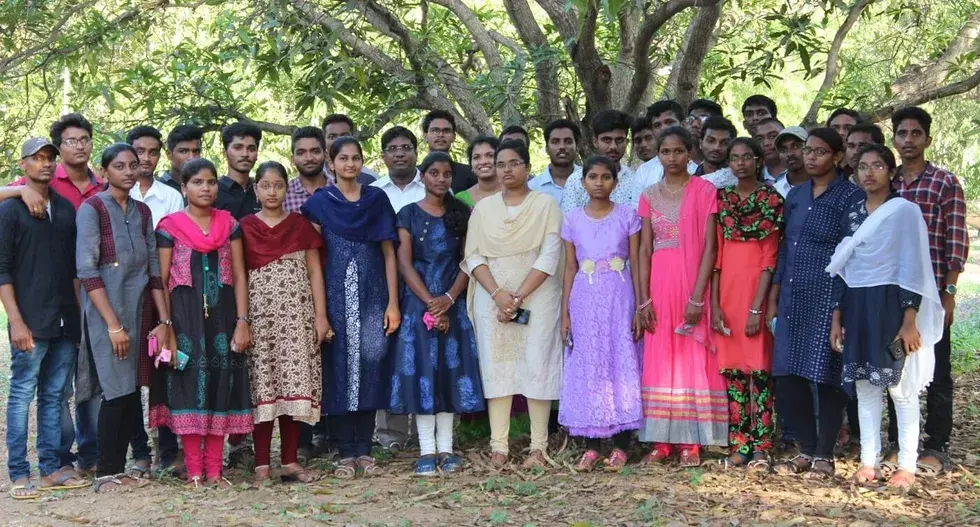
From Wilbur’s experience, these shifts are already visible over time. He reflects on how students who once had limited exposure to formal education have gone on to pursue careers in fields such as engineering, law, and technology. According to him, these individual achievements often translate into broader community influence as graduates bring knowledge, income, and new perspectives back into their environments.
Equally important, he emphasizes, is the role of character development in sustaining this progress. “We are not only educating students intellectually,” Wilbur explains. “We are helping them understand that what they receive is something they can pass on.” He notes that this idea of continuity plays a critical role in how the organization defines success. Students are encouraged to contribute to their communities, creating a cycle in which education becomes both a personal and collective asset.
Wilbur frames education as a resource that evolves alongside societal change, ensuring that students are prepared for emerging opportunities. As industries shift and new technologies develop, the adaptability of education allows individuals to remain relevant within changing economic landscapes. According to insights on the future of education and skills, the future of education demands systems that are flexible, adaptable, and personalized, while lifelong learning has become a cornerstone of modern education. Wilbur’s perspective reflects that same principle, where education helps build the critical thinking, creativity, and collaboration needed for long-term resilience within both individuals and the communities they belong to.
The organization’s emphasis on empowerment rather than dependency is also central to its framework. Wilbur explains that the goal is for students to reach a point of self-sufficiency where they can support themselves and others. He suggests that this transition is essential for creating sustainable systems that focus on generating internal momentum.
At the same time, the role of external support remains an important part of the model’s development. According to Wilbur, much of the organization’s progress has been made possible through the contributions of individual donors who recognize the long-term implications of education-focused initiatives. “Their involvement has enabled the Trust to expand its reach and support students through various stages of their academic journeys,” Wilbur says.
Reflecting on what motivates continued engagement, Wilbur offers a perspective grounded in impact rather than immediacy. “If supporting under-resourced children is something you care about, this can be a meaningful place to contribute,” he says. “The impact isn’t immediate, but many people can see it continue to develop over time.” His vision underscores a broader understanding of value, one that prioritizes long-term transformation over short-term outcomes.
Ultimately, the work of Vineyard India Compassion Trust illustrates how education can function as a foundation for sustainable change. By focusing on both skill development and mindset, the organization contributes to a model where individuals are positioned to influence not only their own futures but also the trajectory of their communities. In doing so, it reflects a broader principle that lasting transformation often begins from within, shaped by the people who are given the opportunity to lead it.


Comments